Bathing a dog at home between grooms sounds simple, and mostly it is. The problems that show up at the salon later, matted coats, flaky skin, a smell that returns in two days, usually trace back to three quiet mistakes: shampoo left in the coat, a coat dried only on the surface, and baths skipped until the dog is genuinely filthy and the job becomes an ordeal.
None of these requires professional equipment to fix. They require diluted shampoo, more rinsing than feels necessary, and drying all the way to the skin. The cost of skipping those steps is paid in coat that has to be clipped short and skin that takes weeks to settle.
The setup that prevents most of the mess
Brush the dog before any water touches it. Water tightens existing tangles into mats, so five minutes with a brush and comb first is the difference between a bath and a felt-making exercise. Lay out towels, shampoo, and a jug or detachable shower head before the dog goes in, because a wet dog waiting while you hunt for supplies will shake, escape, or both.
Use lukewarm water and wet the coat thoroughly before shampoo goes on. Diluting dog shampoo in a squeeze bottle of water helps it spread through a thick coat instead of sitting in one strong patch, and it rinses out far more easily. Human shampoo is best avoided; dog skin is more alkaline than human skin, and products made for people can leave it dry and itchy.
Keep water and shampoo out of the ears and eyes. A cotton ball placed loosely at each ear opening helps during rinsing, and a tearless product made for faces is the safer choice around the head. Work from the neck down and save the face for a damp cloth at the end.
Rinse longer, then dry to the skin
Rinse until the water runs completely clear, then rinse once more. Shampoo residue is the leading cause of the flaking and itching owners blame on bathing itself, and it also makes the coat attract dirt faster, which is why a poorly rinsed dog smells again so quickly. Conditioner, if you use it, needs the same thorough rinse unless the label says leave-in.
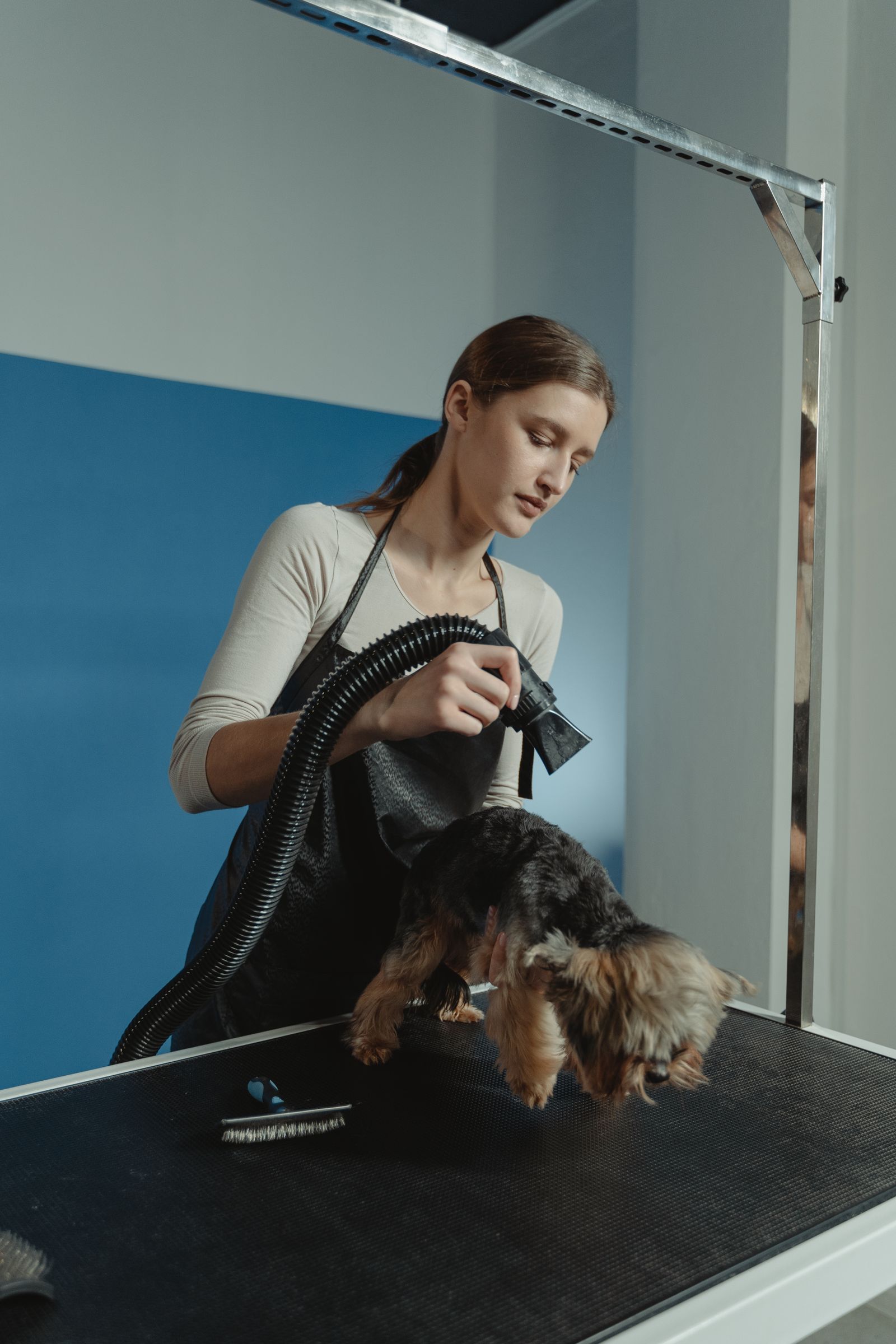
Drying is where home baths most often fall short, especially in Tega Cay's humid summers, when a thick coat can stay damp at the skin for hours. Towel first, then use a dryer on a cool or warm setting, never hot, keeping it moving and parting the coat so air reaches the skin. A coat that feels dry on top but cool and damp underneath is not dry.
What waiting and shortcuts actually cost
Skip pre-brushing often enough and mats form tight to the skin. At that point the humane fix is usually clipping under the mat, which means the coat you were trying to preserve comes off anyway, sometimes with irritated skin underneath that was hidden for weeks. A short home bath every few weeks prevents that outcome far more cheaply in effort than one heroic bath per season.
Under-drying has its own bill. A coat left damp at the skin in warm weather is an invitation to hot spots and yeast, both of which mean a veterinary visit and a dog in a cone instead of a dog who merely needed ten more minutes with the dryer. The pattern is consistent: small, regular, thorough beats rare and rushed.
If home bathing has become a wrestling match, or the coat is already matted, that is the point where a salon bath at Bubbles N' Bows Doggie Salon resets things. Once the coat is back to a clean, fully combed baseline, home maintenance between grooms gets much easier.
Common questions
How often should I bathe my dog at home between grooms?
For most dogs, every few weeks or when genuinely dirty is enough. Dogs with skin conditions may need medicated baths on a veterinarian's schedule, which overrides general advice.
Can I use a hair dryer made for people?
Yes, on its cool or warm setting, held at a distance and kept moving. Hot air can burn skin, especially on thin-coated areas, so check the air temperature against your own wrist.
My dog hates the tub. Any way to make it easier?
Shorten the learning curve with treats, a non-slip mat, and lukewarm water started at the feet rather than the head. Several calm, short sessions beat one long struggle.
Photos in this guide are representative stock images.
← All guides from Bubbles N' Bows Doggie Salon← Back to Bubbles N' Bows Doggie Salon