Ask ten dog owners in Tega Cay how often a dog needs grooming and you will get ten answers, most of them right for their own dog and wrong for yours. The honest answer is that the coat decides. Hair that grows continuously needs cutting on a schedule, hair that sheds in seasons needs brushing and baths, and short hair needs far less than people expect.
If you have never booked a groom before, the steps below walk through what actually happens, from identifying your dog's coat type to what takes place at the appointment, so the first visit holds no surprises for either of you.
Start with the coat, not the breed name
Coats fall into five practical groups. Curly and continuously growing coats, like poodles and most doodles, grow without a natural stopping length. Silky coats, like Yorkies and spaniels, also keep growing but lie flatter. Double coats, like shepherds and retrievers, have a soft undercoat that sheds seasonally under a protective topcoat. Wire coats, like many terriers, have a harsh texture that changes if it is always clipped. Short coats, like beagles and boxers, simply shed individual hairs year-round.
Crossbreeds can land between groups, which is why the coat in your hand matters more than the label on the paperwork. Run your fingers through it: does it feel woolly, silky, harsh, or smooth? Does loose hair come away daily, or almost never? Those two answers place your dog in the right group and set the schedule.
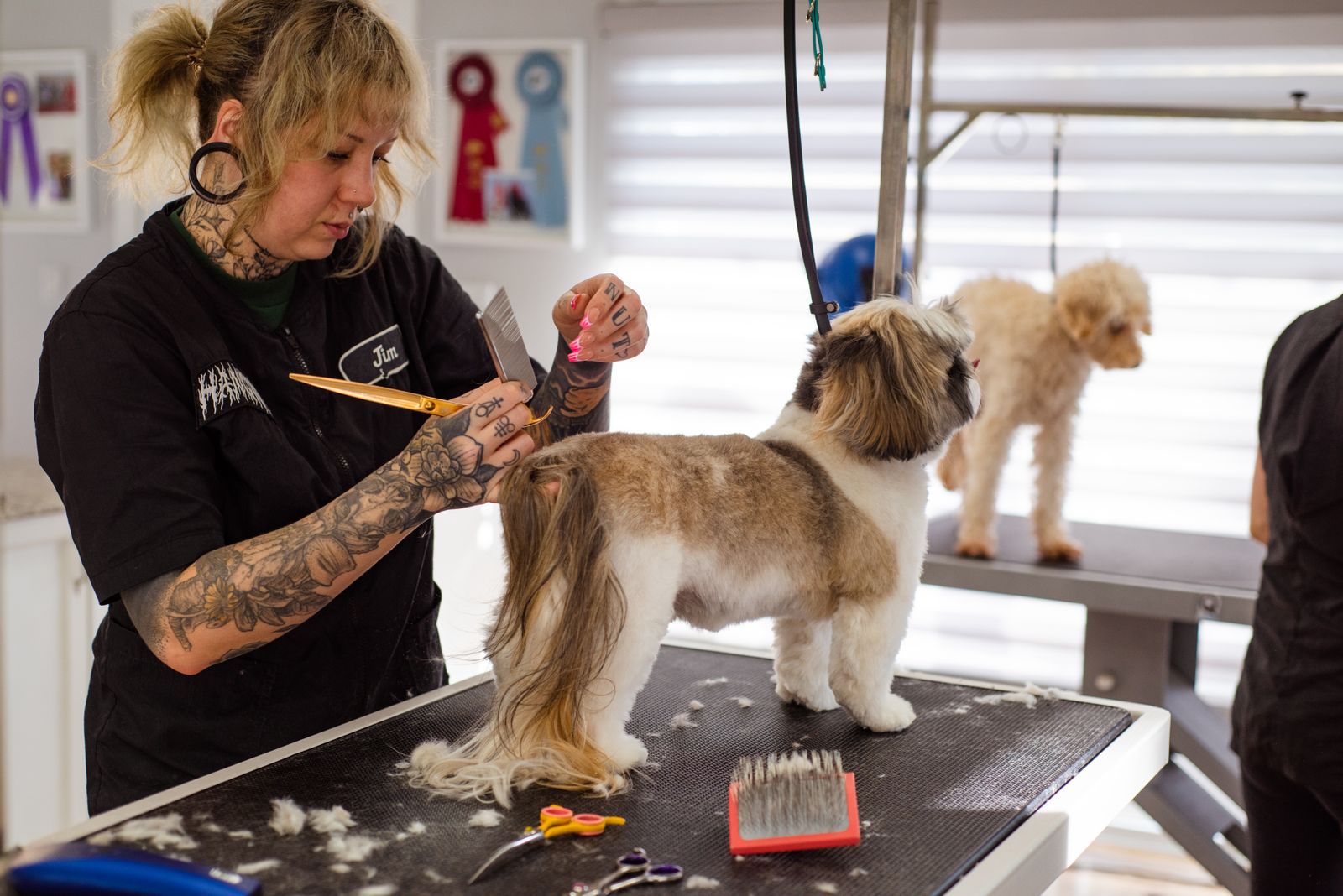
The schedule each coat actually needs
Curly and silky coats generally need a full groom every four to six weeks, with daily to every-other-day brushing at home; stretch it longer and mats set the agenda instead. Double coats do not need haircuts at all in most cases, but they do need baths and thorough brush-outs every six to ten weeks, and more during the spring and fall shed. Wire coats are traditionally hand-stripped to keep texture, or clipped on a six-to-eight-week cycle if texture is not a concern.
Short coats are the low-maintenance end: a bath every month or two, a weekly once-over with a rubber brush, and nails and ears kept up. Across all types, nails need attention roughly monthly regardless of coat, because coat schedules and nail growth run on different clocks. Puppies of any coat type should start with short introductory visits young, so the routine is familiar before the first full groom is due.
Your first appointment, step by step
Knowing the sequence helps you prepare your dog and your questions. A typical first full groom at a salon like Bubbles N' Bows Doggie Salon follows the same broad order, adjusted for the dog in front of the groomer.
- Check-in and coat check: the groomer runs hands and a comb through the coat, notes mats, skin issues, and lumps, and agrees the cut and any limits with you before starting.
- Nails and ears first: nails are trimmed or ground and ears are checked and cleaned while the dog is dry and settled.
- Bath: the dog is washed with shampoo matched to coat and skin, rinsed thoroughly, and conditioned if the coat needs it.
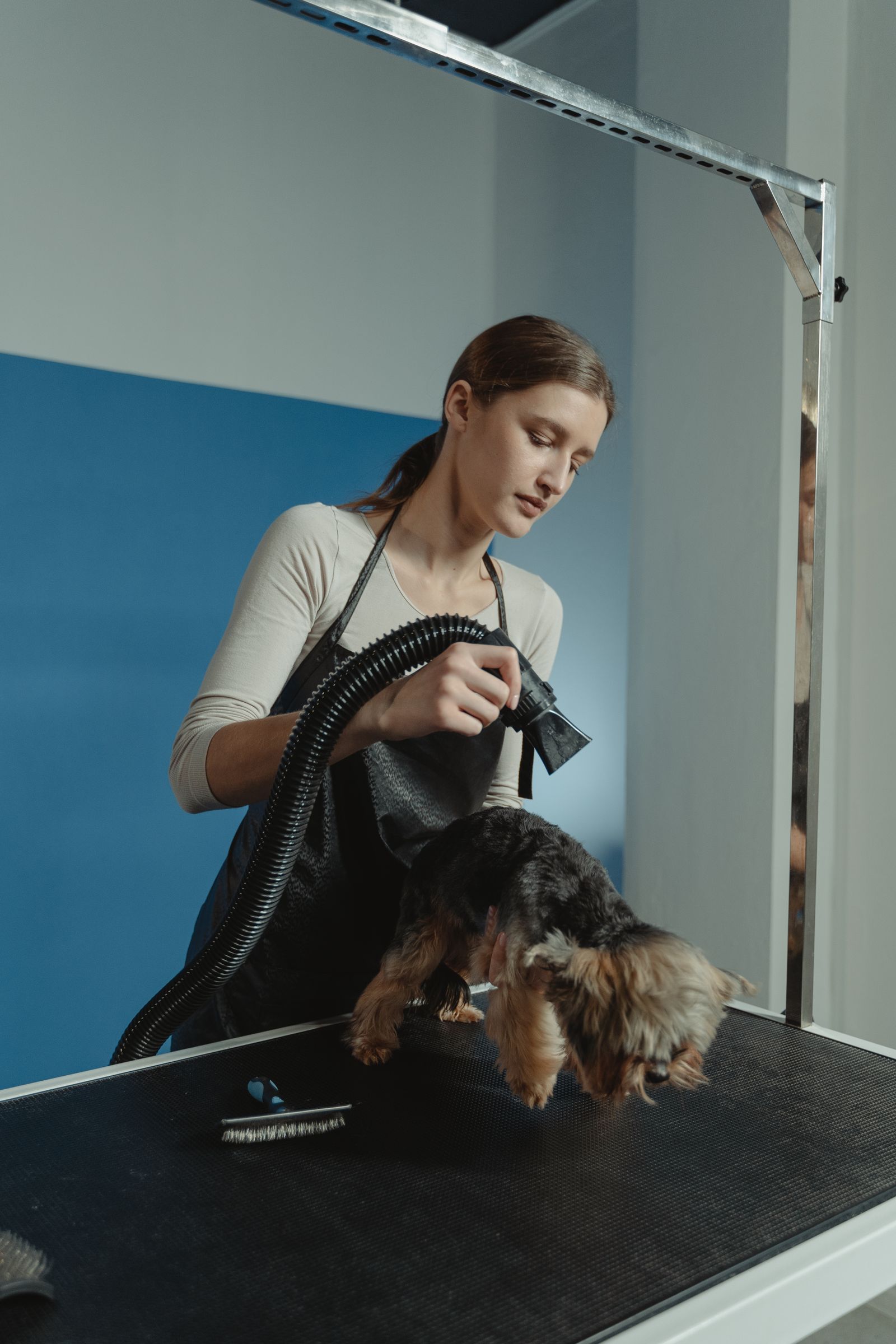
- Drying: the coat is dried fully, which also blows out loose undercoat on double-coated dogs and reveals the coat's true condition.
- Brush-out and comb check: tangles are worked out and a comb is run to the skin to confirm nothing is left hiding underneath.
- The cut or tidy: clippers and scissors shape the coat to the agreed style, including face, feet, and sanitary areas.
- Final check and pickup notes: the groomer tells you what they found, how the dog handled it, and when the coat says to come back.
Keeping the schedule at home
The appointment interval only works if home care fills the gaps. Five minutes of brushing a few times a week on a growing coat prevents the mats that turn a routine groom into a shave-down. Check feet, ears, and the sanitary area weekly, and book the next appointment before you leave the salon while the recommended interval is fresh in mind.
When in doubt, bring the dog in and ask. A groomer would rather tell you the coat can wait two more weeks than meet it two weeks too late.
Common questions
My dog's breeder said grooming every three months is fine. Who is right?
It depends entirely on coat and home brushing. A well-brushed double coat may thrive on that schedule, while a curly coat left three months will usually mat. Judge by the comb test at home.
Does a short summer haircut reduce how often I need to come in?
Slightly, because shorter hair mats more slowly, but the growth rate does not change. Most owners keep the same interval and simply enjoy easier brushing between visits.
What should I bring to a first appointment?
Current vaccination records, any notes about skin issues or medications, and a clear idea of the length you want. A photo of a cut you like helps more than a style name.
Photos in this guide are representative stock images.
← All guides from Bubbles N' Bows Doggie Salon← Back to Bubbles N' Bows Doggie Salon